
Engineered for extreme environments, our vehicle protection systems offer unmatched durability and structural integrity. Partnering with professional pickup bull bar suppliers ensures a stable supply chain, rigorous material testing, and optimized packaging designed for high-volume international logistics. We specialize in fulfilling large-scale orders with precise manufacturing tolerances.
Request Bulk Quote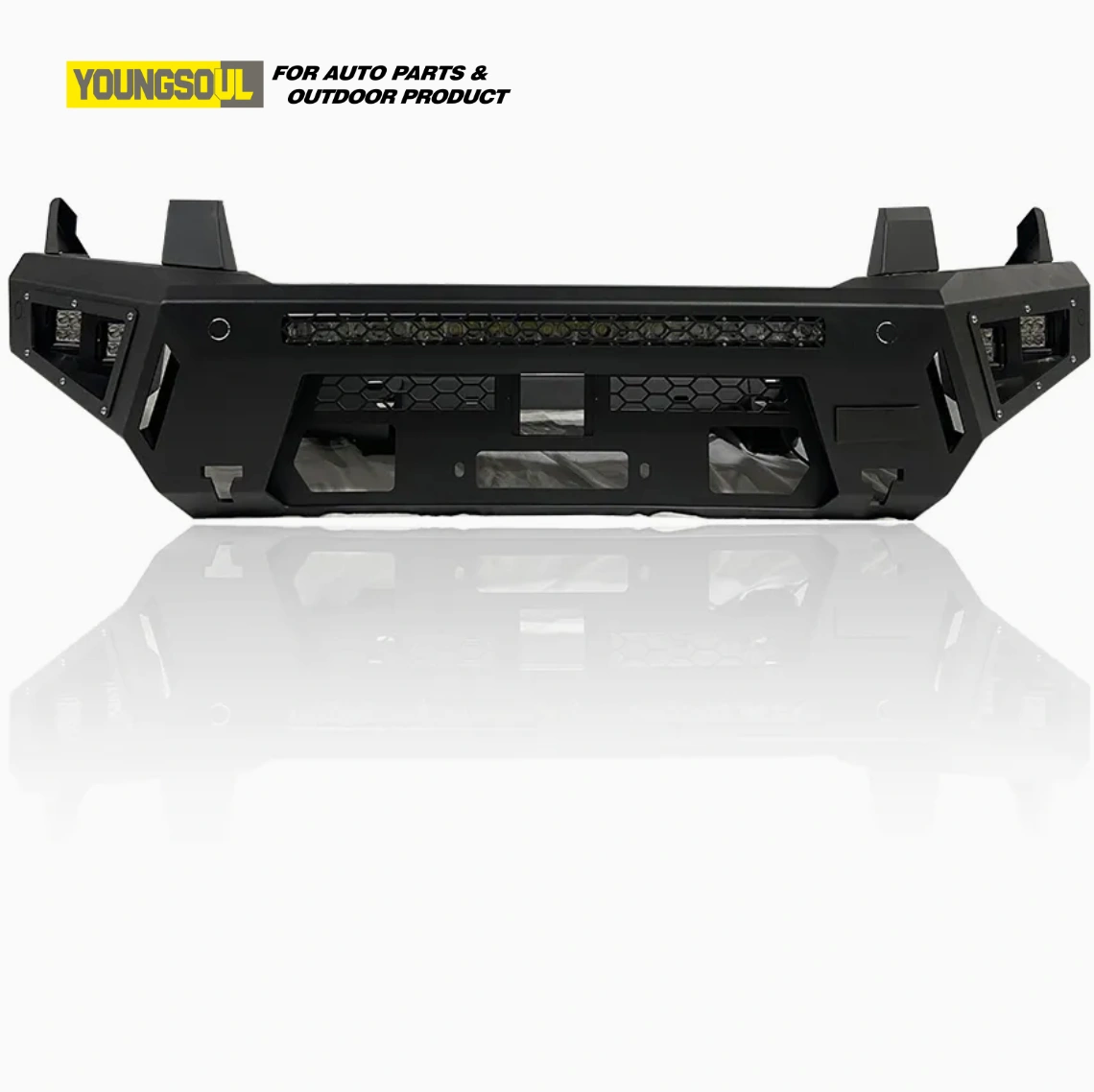

Fabricated using high-grade cold-rolled carbon steel, this assembly is designed to endure severe mechanical stress. The structure features seamless welding and an industrial-grade powder coating for maximum corrosion resistance. Working directly with a dedicated front bumper manufacturer guarantees that dimensional accuracy is maintained across multiple production batches, minimizing installation discrepancies for fleet operators and regional distributors.
An in-depth analysis of the metallurgical characteristics required for off-road protection systems. This article details the importance of steel grades, tube thickness, and structural geometry in mitigating impact forces during collisions.
Read Full Article →A technical overview of chassis mounting points, clearance angles, and hardware requirements. Proper alignment and integration with existing factory chassis rails are crucial for ensuring structural stability without modifying the vehicle frame.
Read Full Article →Evaluating the balance between added front-end weight and protective performance. This study covers engineering strategies used to distribute kinetic energy away from vital engine components during heavy impacts.
Read Full Article →"We recently imported a 40HQ container of these structural units for our distribution network. The weld consistency and powder coating thickness met our exact mechanical requirements. The packaging held up exceptionally well during the transatlantic freight, resulting in zero damage upon unloading."
"The precise mounting bracket alignment significantly reduced installation time for our fleet maintenance crews. The material gauge is exactly as specified in the technical data sheet. A highly reliable source for heavy-duty components."
"Consistent manufacturing quality across multiple batches. The salt spray test results reflect the actual performance in the field, showing no signs of premature oxidation even in coastal operating environments. Highly recommended for bulk procurement."
We strictly utilize high-strength Q235 cold-rolled carbon steel for the main body construction. This material provides exceptional tensile strength while maintaining a predictable density profile. A standard unit weighs approximately 48 kilograms, allowing us to accurately calculate container payloads. For a 40HQ container, this weight specification enables a loading capacity of 180 to 200 units, depending on the exact packaging configuration and dunnage requirements.
The surface treatment involves a multi-stage preparation process followed by a heavy-duty black powder coating application. Prior to coating, each unit undergoes strict acid pickling and phosphating to remove impurities and create a bonding layer. The final powder-coated finish is subjected to rigorous neutral salt spray tests, consistently exceeding 500 hours without exhibiting structural red rust, ensuring long-term durability in highly corrosive environments.
Our export-grade packaging is engineered specifically for bulk maritime logistics. Each bumper is initially wrapped in protective EPE foam to prevent surface abrasion. It is then secured within a 5-layer heavy-duty corrugated carton reinforced with internal corner protectors. This structured packaging prevents crushing when stacked vertically inside the container and minimizes movement during transit, significantly reducing the defect rate upon arrival.
Our manufacturing protocol includes three critical inspection phases. First, incoming raw materials undergo dimensional and metallurgical verification. Second, the welding process is monitored for penetration depth and seam consistency using automated scanning tools. Finally, a pre-packaging inspection verifies the alignment of all mounting brackets and the integrity of the powder coating, guaranteeing that every unit meets the agreed-upon technical specifications.
The internal architecture features a reinforced sub-frame engineered to accommodate heavy-duty winch systems up to 12,000 lbs capacity. Additionally, the upper hoop structure includes pre-drilled, standardized mounting points designed for auxiliary lighting setups. These integrated features ensure that the product is immediately ready for deployment in specialized fleet vehicles requiring functional upgrades.
For a standard 40HQ container order, the production cycle requires 25 to 35 days from the confirmation of technical drawings and receipt of the initial deposit. This timeframe encompasses material procurement, cutting, welding, surface treatment, and final packaging. Our structured supply chain management allows for consistent output, ensuring that high-volume procurement schedules are met with precision.
